Visual encyclopedia
Egypt through the ages — people, dress, food, symbols and science
Eight illustrated chapters that turn a national archive into something you can browse, plan a trip around and invest in. Every plate is documented, every era is placed, and every chapter connects to a live part of the platform.
People & dress
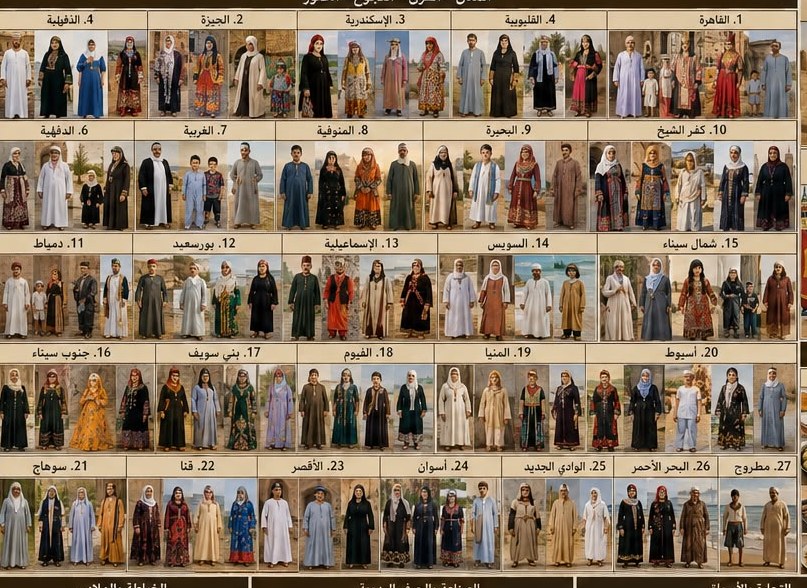
Egyptian dress across the 27 governorates
What a country wears is the shortest way to read it
From the embroidered Siwan gowns of the Western Desert to the indigo galabeyas of the Delta, Egyptian dress is a living map. Each governorate keeps its own stitch, colour code and headwrap — patterns that travelled with caravans, harvests and weddings for centuries. This chapter lays the whole republic side by side so a visitor can see, in one glance, how Cairo, Sinai, Nubia and the coast dress differently while sharing one thread.
Cities, villages, hamlets and kufur — every governorate with its own everyday and festive dress.

Linen kilts, pleated New Kingdom robes, Coptic tunics and early Islamic layers, era by era.

Mamluk silks, Ottoman kaftans, tarboush-era tailoring and the contemporary Egyptian street.
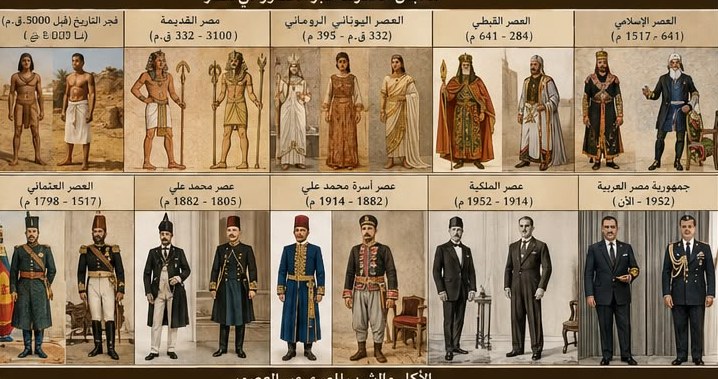
How authority dressed itself — from pharaonic regalia to Khedivial uniforms and modern protocol.
Food & drink
The Egyptian table, ancient and living
Bread was invented here — and never left the table
Egyptians have been baking, brewing and pickling on the same riverbank for five thousand years. Ful and taameya open the morning, molokhia and mahshi hold the family lunch, and hibiscus, sugarcane and mint tea close the night. The plates below trace the line from ancient jars and clay pitchers to the street classics visitors queue for today — a cuisine that never needed reinvention because it never stopped being cooked.
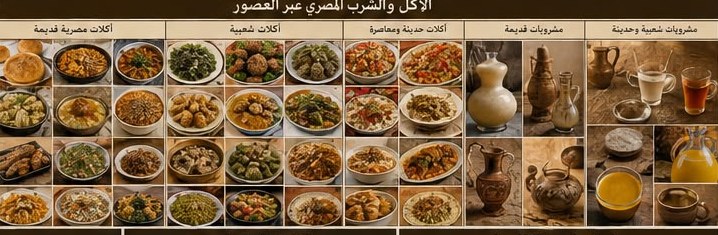
Ancient dishes, street classics, contemporary plates and the old and new drinks beside them.
Flags & state symbols
Egyptian flags, emblems and anthems
One identity, redrawn but never broken
Every flag Egypt has raised tells you who was standing on the riverbank that century. The crescent of the Khedivate, the tricolour of 1952, the two stars of the United Arab Republic, the Eagle of Saladin still on the mast today — read in sequence, they are a national autobiography in cloth. Beside them stand the coats of arms, the official flags of the state's institutions, and the anthems Egyptians have sung from *Salam Li Misr* to *Bilady, Bilady, Bilady*.
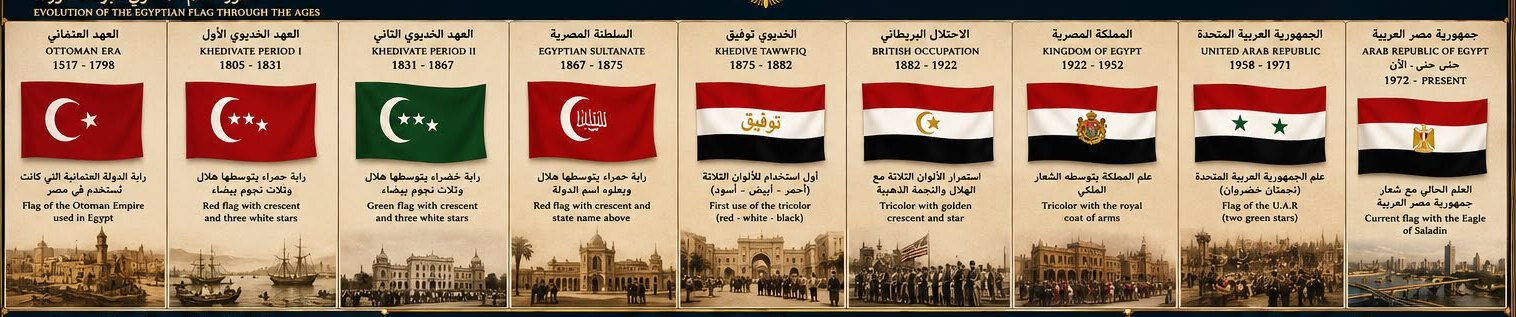
From the Ottoman era to the present tricolour, with the story behind each change.
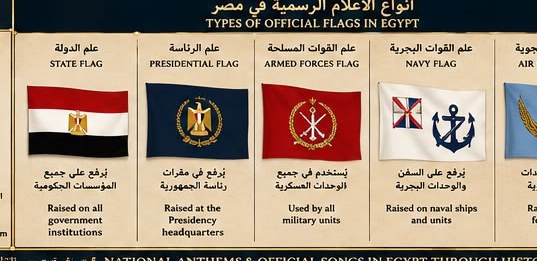
State, presidential, armed forces, navy, air force and governorate flags.
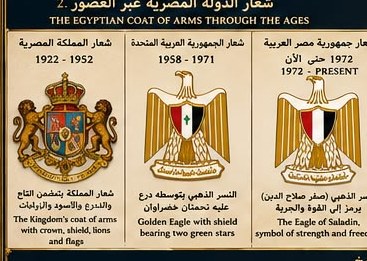
Kingdom crown and lions, the UAR shield, and the Eagle of Saladin in use today.
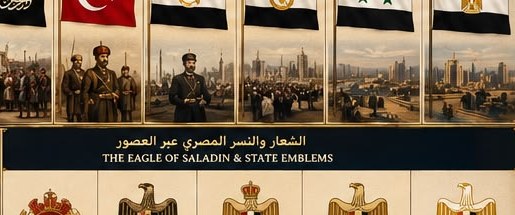
Muhammad Ali's emblem, the Khedivial eagle, the Kingdom's eagle and the modern republic.

Lyricists, composers and the moment each anthem entered national memory.
Epics & defence
Epics of Egypt through the ages
A land that built a civilisation, defended it, and still does
Megiddo, Qadesh, Hattin, Ain Jalut, Damietta, October 1973 — the same valley, the same instinct. Egyptian history is not a chain of conquests but a long record of protection: of trade routes, of a river, of a way of life. This chapter sets the rulers, the famous battles, the shifting scope of influence and the peace treaties Egypt signed side by side, so the story reads as strategy rather than spectacle.

Each era with the wars it fought and the achievements it left behind.

From Megiddo and Actium to Ain Jalut, Tel El Kebir and the October War.
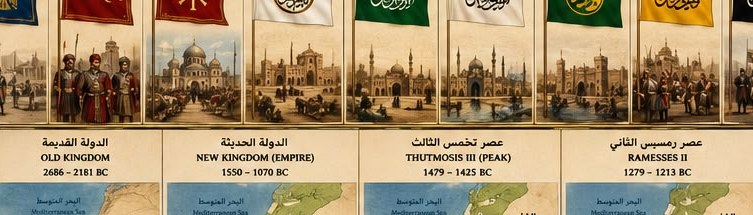
Old Kingdom, New Kingdom, Thutmose III and Ramesses II — the reach of the state.
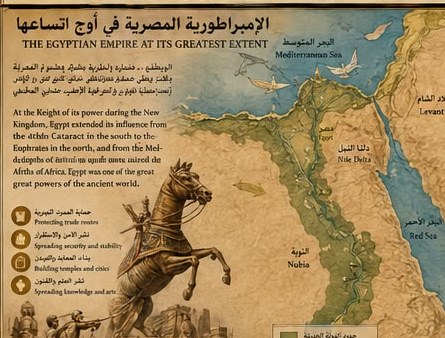
From the Fourth Cataract to the Euphrates: military, political and cultural projection.

Kadesh, Amasya, London, Rhodes, Camp David — Egypt at the negotiating table.
Geography & provinces
Provinces & districts across every era
The administrative memory of the Nile Valley
Long before the 27 governorates, Egypt was 42 nomes, then Roman provinces, then Coptic bishoprics, then Islamic wilayat and Mamluk iqta'. The borders moved; the logic never did — the river organises the country. Read the ancient province map next to today's administrative divisions and the continuity becomes obvious: the same clusters of settlement, the same corridors, the same names surviving in modern towns.
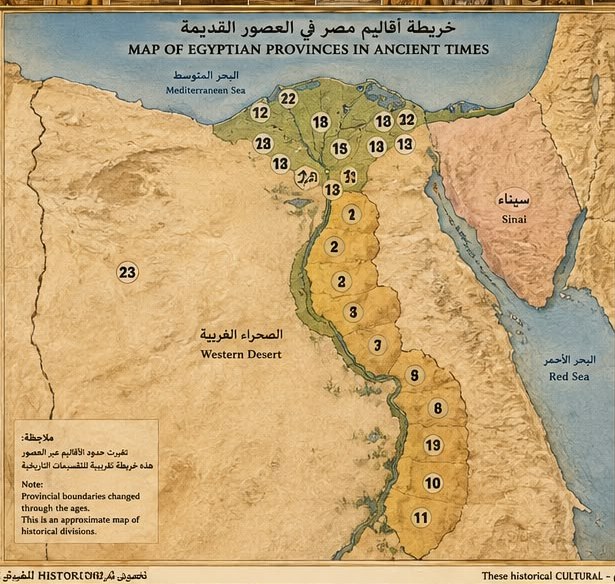
Upper and Lower Egypt with their numbered nomes — an approximate map of historical divisions.

Delta, Greater Cairo, North Coast, Canal, Sinai, Middle and Upper Egypt, Nubia, deserts and Red Sea.
Crafts & daily life
Trades, markets and the rhythm of the day
The workshop is the oldest museum in Egypt
Copper hammered in the same alleys since the Mamluks, looms still threaded by hand, spice sacks opened at dawn, fields worked at the pace of the flood. Egypt's crafts are not heritage displays — they are working businesses you can visit, commission from and buy. This chapter opens the workshops, the souks, the farms and the ordinary street so travellers can plan a day inside the real economy of the country.
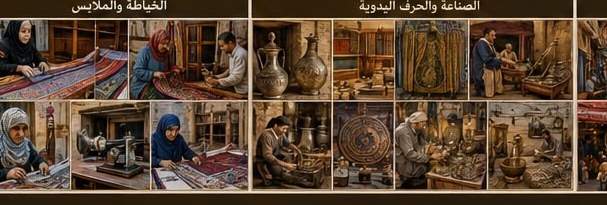
Weaving, tailoring, metalwork and inlay — the ateliers behind Made in Egypt.
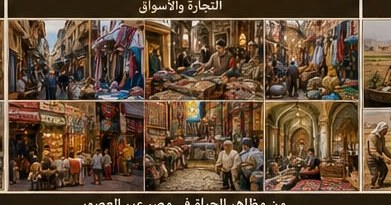
Historic souks and covered bazaars where the country still does business face to face.
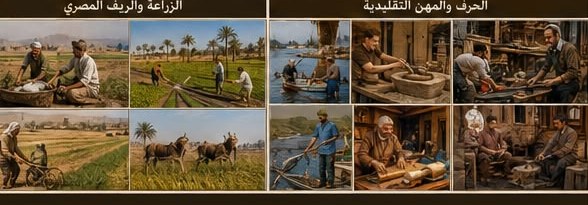
Fields, canals and river work — the oldest continuous agriculture on earth.

Streets, cafés, corniches and skylines — Egypt as it is lived today.
Science & continuity
The genetic map of Egyptians
Science proves what history already knew
In 2025 the first complete genome of an Old Kingdom individual — around 4,500 years old — was sequenced and published. It confirmed what the language, the crafts and the faces already suggested: modern Egyptians carry substantial genetic continuity with the ancient population of the valley, with natural admixture over millennia of trade and conquest. The Egyptian Reference Genome Project now targets 25,000 genomes and a national genome centre.

From Miescher in 1869 to the first complete Old Kingdom genome and the national genome centre.
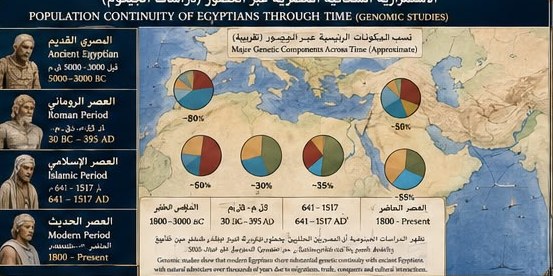
Major genetic components across ancient, Roman, Islamic and modern periods.
Film & screen tourism
Egypt through the ages, told to the world
Inspiring cinema, living history, thriving tourism
Every era in this encyclopedia is a script waiting for a camera. Egypt One's film desk exists to turn documented history into world-class Egyptian films, series and animation — shot in Egypt, produced by Egyptian talent, distributed globally. For investors it is a pipeline: studios, locations, post-production, training and film tourism. For visitors it is a reason to stand where the scene was shot.
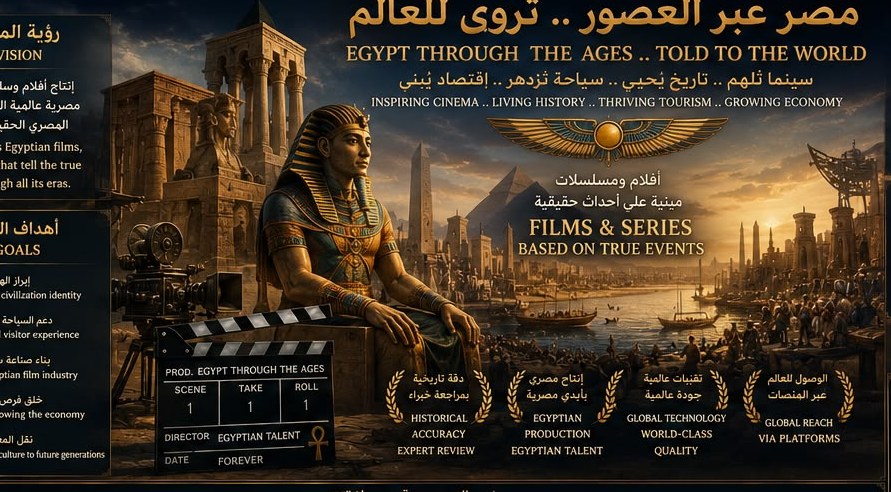
Films and series based on true events, with historical accuracy reviewed by experts.

Prehistoric, Old Kingdom, New Kingdom, Greco-Roman, Coptic, Islamic, Mamluk and modern Egypt.
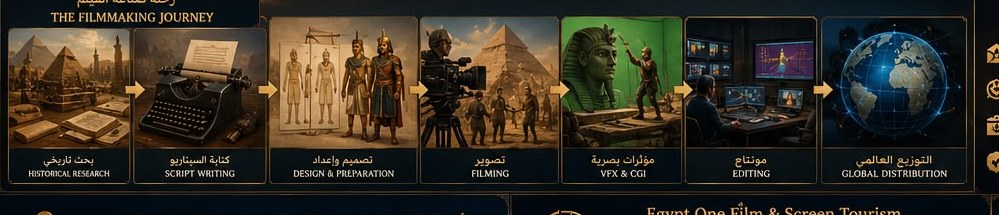
Research, script, design, filming, VFX, editing and global distribution.
Bring a chapter to life with us
Museums, producers, studios and investors can license, extend or sponsor any chapter of the visual encyclopedia.